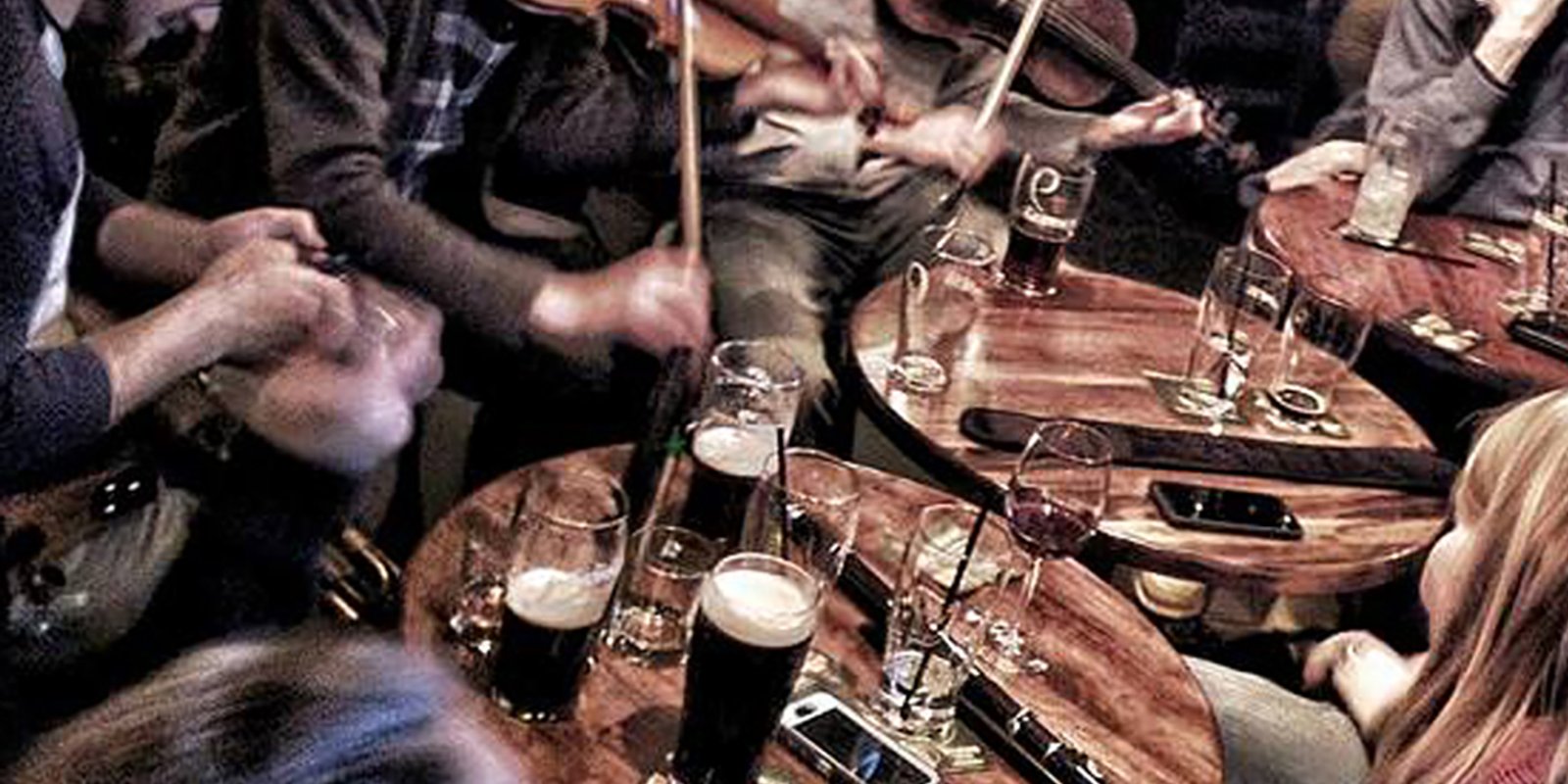

No stage, no setlist, no advanced tickets.... A group of locals--musicians--pull their chairs into a rough circle, someone lifts a fiddle to their shoulder, and the music begins — a reel tumbling forward at full speed, notes arriving so quickly they seem to blur, and yet somehow perfectly ordered, perfectly together. Someone across the circle joins in on a tin whistle. A guitar finds the rhythm. A bodhrán begins to pulse.
This is a seisiún — a traditional Irish music session. And every Wednesday evening at Nine Irish Brothers in West Lafayette, starting around 6:30 PM and running until at least 9, one takes place right here in the greater Lafayette community.
If you have never been to a session before, you may not know quite what to expect. This article is for you.
What a Session Is — and What It Isn't
A session is not a concert. A concert has a stage and an audience and a separation between the people making the music and the people receiving it. A session collapses that distance entirely.
In a session, the musicians sit among the pub's other patrons — at the same height, on the same kind of chairs, around the same kind of table. The music flows outward into the room rather than downward from a stage. You might be sitting two feet from the fiddle player. You might be close enough to see the calluses on the guitar player's fingers. The music isn't performed at you; it happens around you, and you are a part of it simply by being there.
A session is also not a rehearsal. There are no rehearsals in traditional Irish music, not in the session context. The musicians arrive without knowing exactly what will be played. Someone starts a tune — a reel, a jig, a hornpipe, a polka — and the others join in if they know it, or listen if they don't. When that tune ends, another begins. The session is entirely spontaneous, driven by the collective knowledge and instincts of the players in the room.
The Surprising Origin of the Session
The romantic view of the Irish session — that it has existed since ancient times, musicians gathering by firelight in thatched cottages since before memory — is a beautiful image. It is also, as it turns out, largely a myth.
The truth is both more recent and more moving. According to Dr. Reg Hall, a globally recognized authority on Irish traditional music, the session as we know it today was born in 1946 — in London, not Ireland. And it was born not from ancient custom but from immigrant longing.
After the Second World War, thousands of Irish men and women came to Britain to rebuild the country — working on the buildings, in the hospitals, on the roads. They arrived in a foreign city with little, and they missed home fiercely. Traditional music had always been played in kitchens and at outdoor dances back in Ireland, but not in pubs. Before 1946, there was essentially no Irish music in any English pub, and precious little in Irish pubs either. One Irish fiddle player at the time was reportedly told he could play in a London pub only if he kept one foot outside the door.
Then, at the Devonshire Arms pub in Kentish Town, London, a landlord from County Sligo decided to do something about it. He invited musicians from Sligo, Mayo, and Roscommon — many of them from the small area around Tubbercurry, people who knew each other and each other's families — to come and play in his pub, just as they would have played in someone's kitchen back home.
There was one significant difference from the kitchen sessions they were used to: there was no dancing. In the pub, people sat and listened. They clapped along. They had the craic. The musicians, no longer playing to drive the feet of dancers, began playing for each other — and for a listening audience that was new to Irish music in this form.
That first session spread. As more Irish workers arrived in London in the 1950s, the sessions multiplied. Musicians from different counties who had never met in Ireland found themselves sharing tunes in London pubs, combining regional styles, creating something new from the collision of traditions. The session as a living, traveling institution was born — and it has never stopped moving.
Today, sessions take place in pubs across Ireland, Britain, the United States, Australia, Canada, Japan, Argentina, and virtually every country where Irish music has found a home. The same spontaneous, unwritten, unrehearsed tradition that started in a London pub in 1946 is alive every Wednesday night in West Lafayette, Indiana.
The Music and the Instruments
Irish traditional music is largely unwritten. It is learned by ear — by listening, by playing alongside more experienced musicians, by absorbing thousands of tunes over years of sessions until the music lives in the muscle memory rather than on the page. A session musician might know hundreds of tunes without ever having read a note of them.
The tunes themselves come in forms: reels are in 4/4 time and move at a fast, driving clip that is immediately recognizable. Jigs are in 6/8 time and carry a lilting, skipping quality. Hornpipes are slower and more stately. Polkas are quick and playful. Slip jigs, slides, and mazurkas round out the repertoire. In a session, these forms tumble into each other over the course of an evening, the energy rising and falling as the music demands.
The instruments of the Irish session are distinctive and worth knowing. The fiddle — the same instrument as the violin, played with a different technique and spirit — is the melodic backbone of most sessions. The tin whistle is the most accessible entry point for beginners: small, inexpensive, and capable of producing the bright, soaring quality that defines Irish melody. The uilleann pipes are the Irish bagpipe, a complex and beautiful instrument that takes years to master and produces a sound unlike anything else in the world.
The bodhrán (pronounced BOH-rawn) is a frame drum struck with a double-headed beater called a tipper, providing the heartbeat of the session. The Irish flute — a wooden transverse flute with a breathy, warm tone — adds another melodic voice. The concertina, the tenor banjo, the mandolin, and the guitar all appear in various session configurations, the guitar and bouzouki typically providing harmonic underpinning for the melody instruments.
Session Etiquette: What Musicians and Listeners Should Know
Sessions have a culture that has developed organically over decades, and knowing a little about it will enrich your experience whether you're a musician pulling up a chair or a listener pulling up a pint.
For musicians: the session belongs to everyone equally, and the first rule is to listen as much as you play. If a tune is called that you don't know, put the instrument down and absorb it. Playing along on an instrument when you don't know the tune disrupts the flow for everyone. Wait for a tune you know, then add your voice. Follow the lead musician's tempo and phrasing rather than asserting your own. Respect the circle — introduce yourself, make eye contact, communicate through the music.
For listeners: you are welcome, always. The session is not a private club. Sit nearby, order a drink, and let the music work on you. Applaud between sets of tunes rather than between individual tunes — the musicians often run several tunes together as a medley, and interrupting mid-flow is considered a slight disruption. Beyond that, there are no rules. Ask questions of the musicians between tunes if you're curious. They are almost universally delighted to talk about what they love.
Every Wednesday at Nine Irish Brothers
Our West Lafayette session is listed on thesession.org — the definitive global database of traditional Irish music sessions, used by musicians the world over to find a session wherever they travel. That listing is itself a mark of authenticity. Not every gathering of musicians qualifies. A session earns its listing by being the real thing.
The Nine Irish Brothers session has been running for years, weathering scheduling changes and a pandemic pause and returning stronger each time. Those who have attended describe it consistently in the same terms: welcoming, fun, relaxed, great people, great tunes. Beginners are not just tolerated — they are actively encouraged. More experienced players have been known to offer tips and even impromptu lessons between tunes for newer musicians who show up with an instrument and a willingness to learn. That generosity is central to the session culture, and it is fully alive on Howard Avenue.
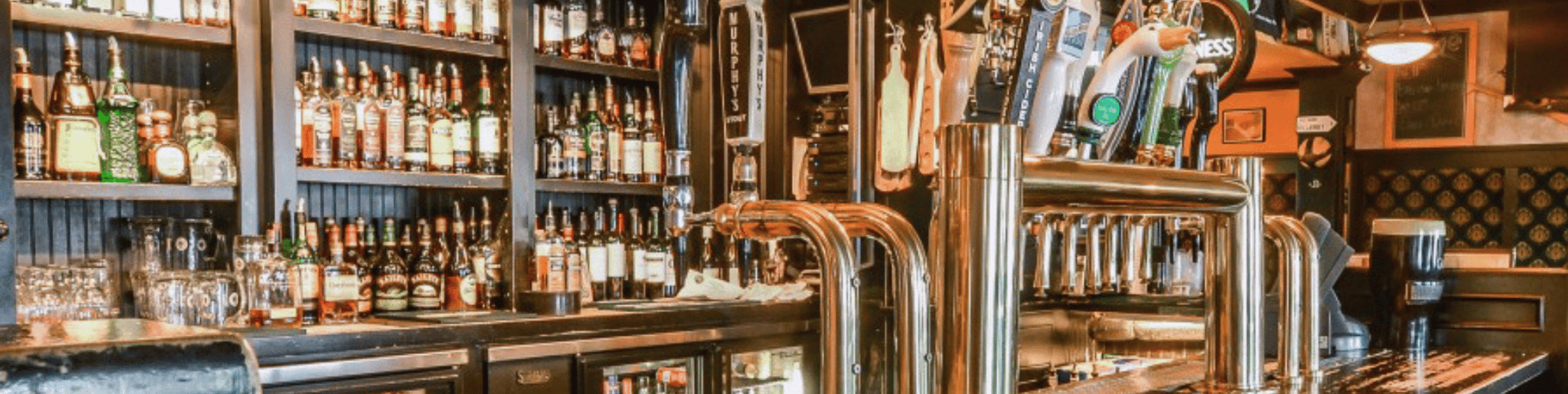
The session runs every Wednesday evening, beginning around 6:30 PM and continuing until at least 9 PM. It is free to attend. There is no cover charge, no reservation required, and no dress code beyond "come as you are." You will find a warm room, good music, a proper pint of Guinness or a glass of Irish whiskey, and a circle of musicians who are doing exactly what musicians in London pubs started doing in 1946: playing the music they love, in a pub, for the pure pleasure of it.
Come and Listen. Or Bring Your Instrument.
A session is one of those experiences that is difficult to fully convey in words. The way a reel sounds when six musicians who know each other's playing find the same groove at the same moment — it produces something that is more than the sum of its parts, something that vibrates in the chest rather than just the ears. It is why people who discover sessions tend to come back every week for years.
If you play Irish traditional music — or any instrument in the family — come on a Wednesday with your fiddle or your flute or your bodhrán and pull up a chair. The circle is open.
If you don't play an instrument, come anyway. Order a Guinness. Find a seat near the music. Let it happen around you. You don't need to know a single tune by name to leave a session feeling like you were part of something.
The session at Nine Irish Brothers West Lafayette runs every Wednesday from approximately 6:30 PM to at least 9 PM, at 119 Howard Avenue, West Lafayette — just steps from the Purdue campus. No cover. No reservation. Just the music.